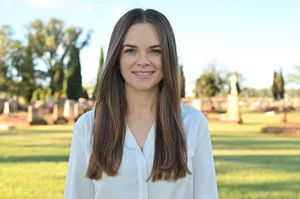
Natural Burial Community Q&A Evening 26th February 2026
Hello and welcome to my first blog post following the Natural Burial Community Q&A Event that I, Brittany Rose, hosted last week on 26th Feb 2026 - It was a night to remember!
Approximately 100 community members attended the meeting which was held at 6pm in the Virgo Funerals Chapel, 24 Pioneer Avenue, Kingaroy, QLD.
I presented trivia, a powerpoint presentation on natural burial practices during which Dr. Sandra Tuszynska also presented on soil microbiology and restoration, and then the panel members answered questions from the community in an engaging discussion.
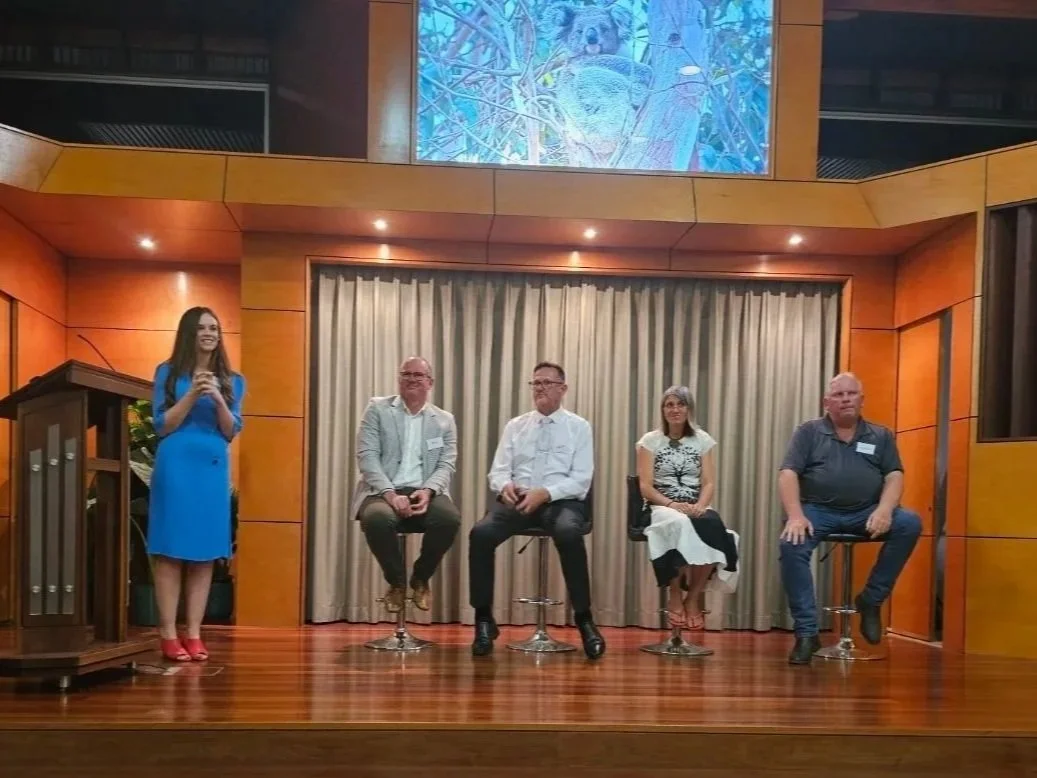
Presenter Brittany Rose and Panel Speakers Ben Kelly, Jason Talbot-Scobie, Dr. Sandra Tuszynska and Cr. Heath Sander
We covered what natural burial it is, how it differs from conventional methods and why it’s an important disposition method to consider.
Dr. Sandra Tuszynska (soil ecologist and microbiologist) presented relevant information on soil, and how natural burials can enhance soil microbiology, if done correctly, for example adding mulch to the grave at the time of burial, to enhance microbial life and therefore enhancing the natural process of decomposition.
Our wonderful panel of speakers took their seats on stage and we proceeded with our community discussion. Many community members asked questions and it was a very engaging discussion.
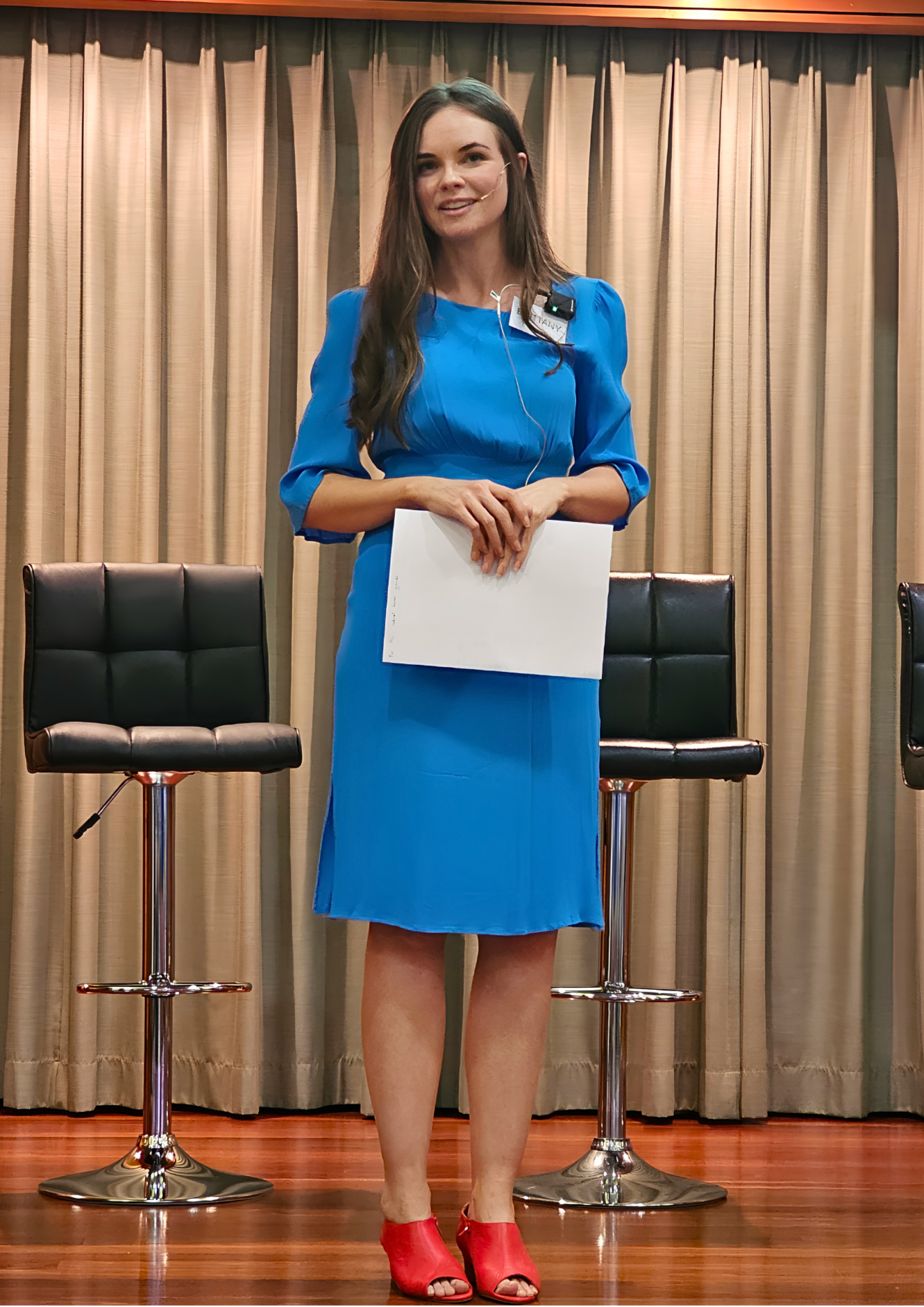
Brittany presenting trivia to kick the evening off
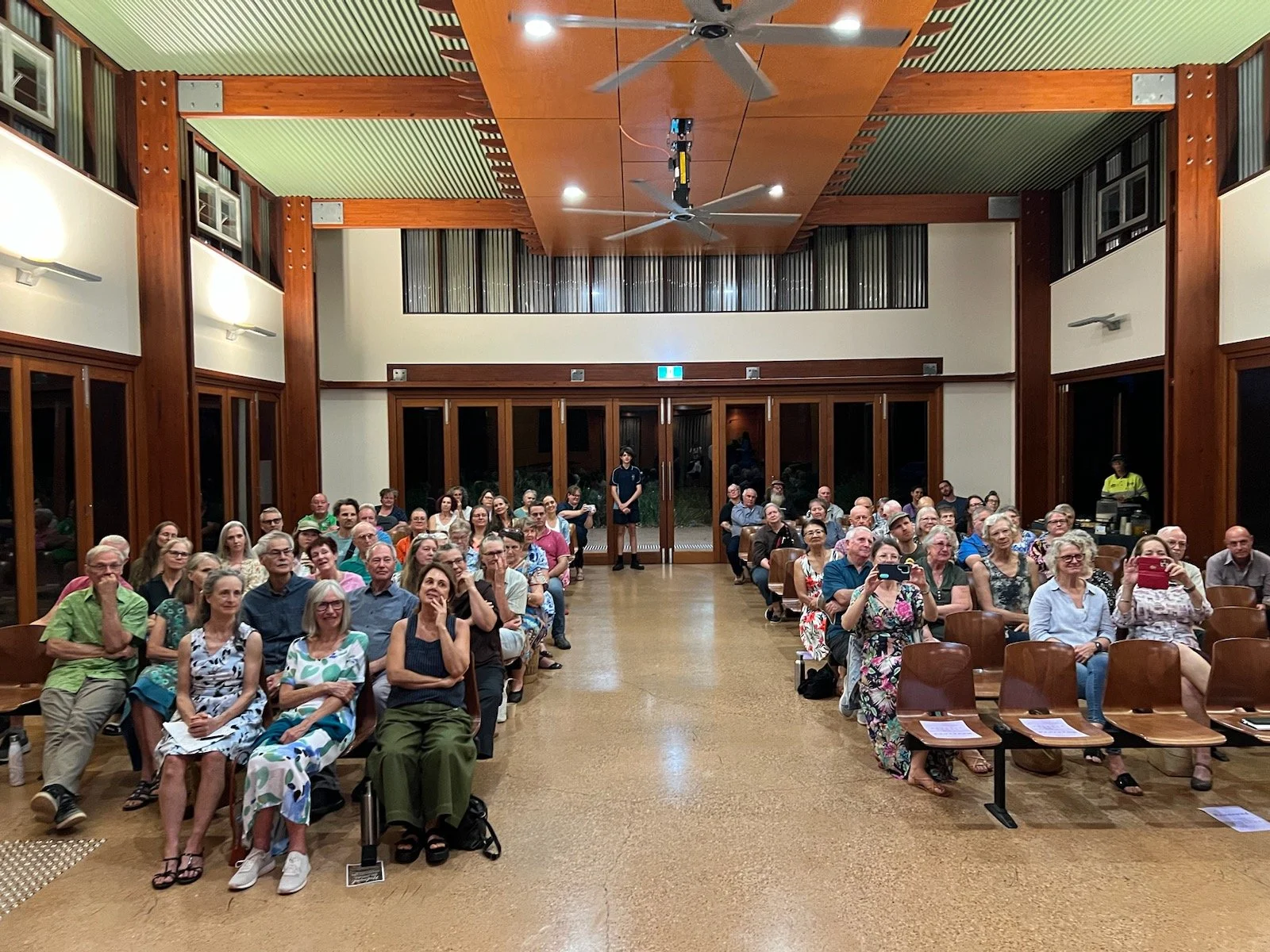
Community members were engaged and inquisitive about the topic of natural burials
Questions from community members and a brief summary of the answers included;
If I had land that I wanted to use as a Natural Burial Cemetery for public use, how could I do that?
It depends on your local council, you would need to talk to them and plan the site.
Is natural burial cheaper?
It can be cheaper. Simplified monuments, less intensive mortuary prep and biodegradable coffins can contribute to lower costs. In Alberton Park Natural Burial section it was more expensive because of the need for council to pay workers to weed the cemetery by hand rather than using pesticides. An community member suggested dense planting of natives be done at the time of burial to mitigate the need for weeding. It was agreed that methods such as this, aswell as better planning could mitigate higher costs that can be associated with natural burial.
Can you have a natural burial in a regular cemetery?
Yes, however having a designated natural burial ground provides overall environmental regeneration and care in that area.
How eco friendly is aquamation/alkaline hydrolysis?
It isn’t. This is a case of “greenwashing.” It actually requires a lot of energy to boil water for 8+ hours, and each water cremation uses 1000+ litres of water that is not recycled. The end result is an alkaline solution that is not environmentally friendly, but is frequently poured back into the environment.
What if you did dense planting in an area after a burial, wouldn’t that negate the need for weeding and maintenance in that area thereafter, thus bringing down fees for natural burial because of decreased maintenance required by council in the long term, as opposed to conventional cemeteries?
Yes, planning for the long term is the key for successful revegetation and lower maintenance fees. This would be an excellent way to create a green local space quickly, regenerating the native bushland whilst ensuring minimal/no council maintenance is required in future.
Can you have double interments?
No, only single interments. This is because the microbes that decompose remains are found closer to the ground surface, so burying bodies at deeper depths (as you would for a double interment) contradicts the principles of natural burial.
Surely there are parcels of land that council aren’t using- as ratepayers we should be able to say we want that land to be designated to cheaper burial grounds.
Yes, this is something you could talk to your local council about.
Are there laws about what can and cannot be cremated? e.g plastics in coffins, flower oasis’, teddy bears etc
At this stage, no, but this is something ACCA is reviewing.
What happens to metal hip replacements etc in a natural burial?
They remain in the ground. This is an unfortunate outcome, but not really something that can be prevented.
Will dingos dig up bodies that are buried at shallower depths?
If dingos are known to live in a certain area it would unlikely be a suitabale location for a natual burial ground. This has not proven to be a problem at other natural burial cemeteries in Qld.
Would a natural burial cemetery be protected from tree clearing in future?
Yes, most likely. It would depend on the local council’s regulations.
What happens to the leachate from bodies (heavy metals, chemotherapy and pharmaceutical drugs, chemicals in the body) in a natural burial?
In natural burial this problem is solved right away, because the decomposing microbes have access to the chemically untreated body and can get to work right away at filtering or metals and leachate while breaking down the remains. This is one of the significant benefits to natural burial, as it does not contaminate the soil or groundwater.
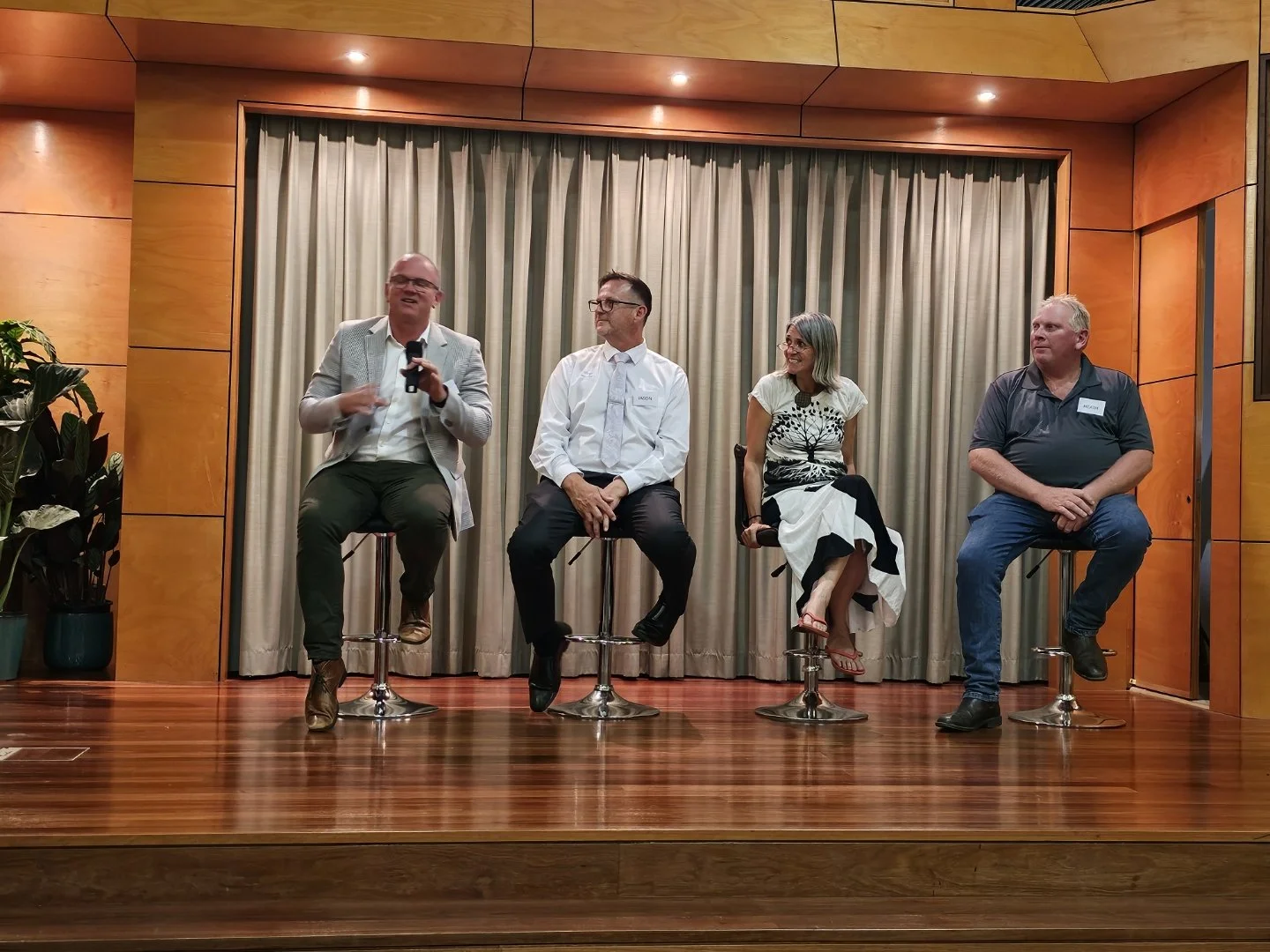
Panel Speakers (left to right): Ben Kelly, Jason Talbot-Scobie, Dr. Sandra Tuszynska and Cr. Heath Sander
The Panel Speakers included:
Ben Kelly (CEO Australasian Cemeteries and
Crematoria Association)
Ben Kelly has been the CEO of the Australasian Cemeteries and Crematoria Association (ACCA) since 2023. ACCA is a not-for-profit organisation that supports and connects cemetery and crematoria professionals across Australasia through leadership, advocacy, and professional development.
He has worked with InvoCare and went on to manage cemeteries for both Brisbane City Council and the City of Gold Coast. While at the City of Gold Coast, Ben oversaw the natural burial area at Alberton Cemetery — one of the first council-operated natural burial areas in Queensland.
Jason Talbot-Scobie (Funeral Director & Manager of
Virgo Funerals)
Jason Talbot-Scobie is a funeral director and manager of Virgo Funerals and South Burnett Crematorium. Jason is the longest running funeral home manager in the Propel Funeral Partners group, having worked in the funeral industry for 19 years, and managing Virgo Funerals for the last 12 years. Jason is also an enrolled nurse with 17 years experience working in hospitals and aged care facilities.
Dr. Sandra Tuszynska (Soil Microbiologist and Ecologist)
Sandra Tuszynska (PhD) is a mycologist, a soil microbiologist and ecologist who feels passionate about ecosystem and biodiversity restoration. As a science communicator, public speaker and educator, Sandra explains how to cultivate soil biodiversity as the primary step in food production and ecosystem regeneration. In her Soil Restoration Course she describes the intricate symbiotic relationship between plant roots and their associated microbes, providing practical tools to restore our soils with life. Sandra’s Soil Restoration Course: www.soilrestorationcourse.com
Cr. Heath Sander (SBRC Councillor & Excavator Contractor)
Heath Sander is a Councillor on the South Burnett Regional Council. Heath began as a labourer for SBRC in 1999, has since established his own excavator operating and contracting business and provides excavation services in South Burnett cemeteries. Heath can offer insight from the perspectives of the Council, aswell as from his vast knowledge in the earthmoving, management and logistics industry and from his years of serving grieving families in the South Burnett, including Cherbourg, by liaising with families, funeral directors and council.
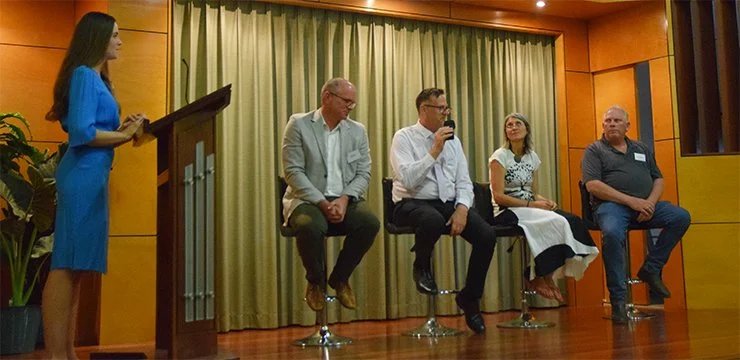
Facilitating panel discussion
In attendance were South Burnett’s Mayor, Kathy Duff, along with Deputy Mayor and Councillor Ros Heit, and Councillors Deb Denien and Danita Potter. Other council staff were also in attendance.
It was an exciting evening with lots of positive feedback from the community, mayor and council members.
I’d like to thank everyone who came, it was wonderful to see such a great turnout from our community, and the atmosphere was one of curiosity and enthusiasm! It wouldn’t have been what it was without each of you who attended.
I also want to thank panel members Sandra, Jason, Ben and Heath for their generosity in giving their time and expertise for free, Jason for providing the Virgo’s chapel in which the meeting was held, Rahni Rose for her photography and Archie Hitchins for running the audience microphone.
I will be hosting one more event on Monday the 30th of March 2026, 6pm, at Virgo Funerals, 24 Pioneer Avenue Kingaroy, QLD.
All welcome!
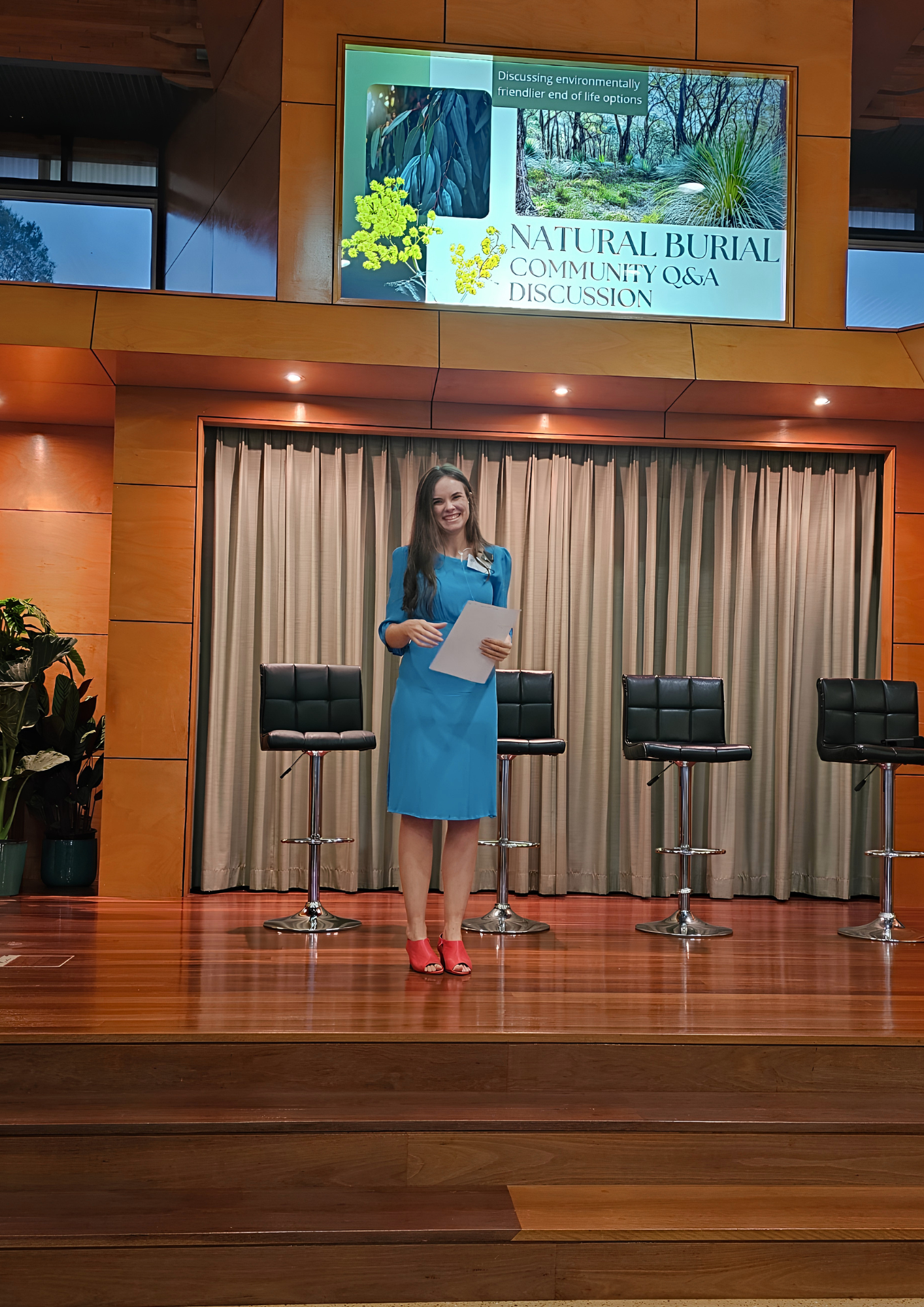
Thank you for your support and interest, stay tuned for updates.
If you would like to get in contact, you can email me on:
brittanyrosecelebrant@gmail.com
Thanks,
Brittany
Click the link below to read South Burnett Online’s article on the event:
South Burnett Online Article, published 2nd March 2026
Burnett Today Newspaper article:
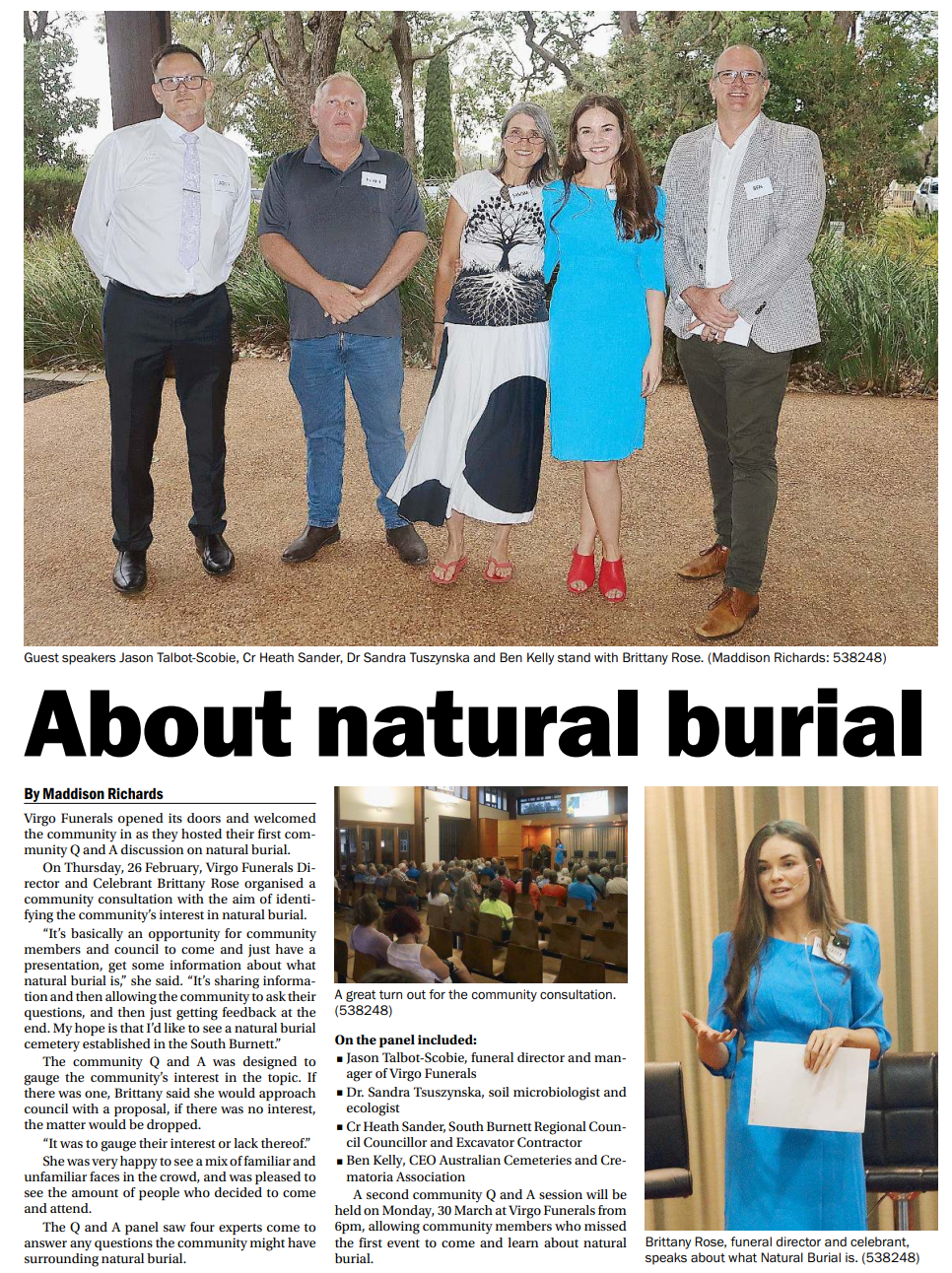
Burnett Today Article, Thursday 5th March 2026
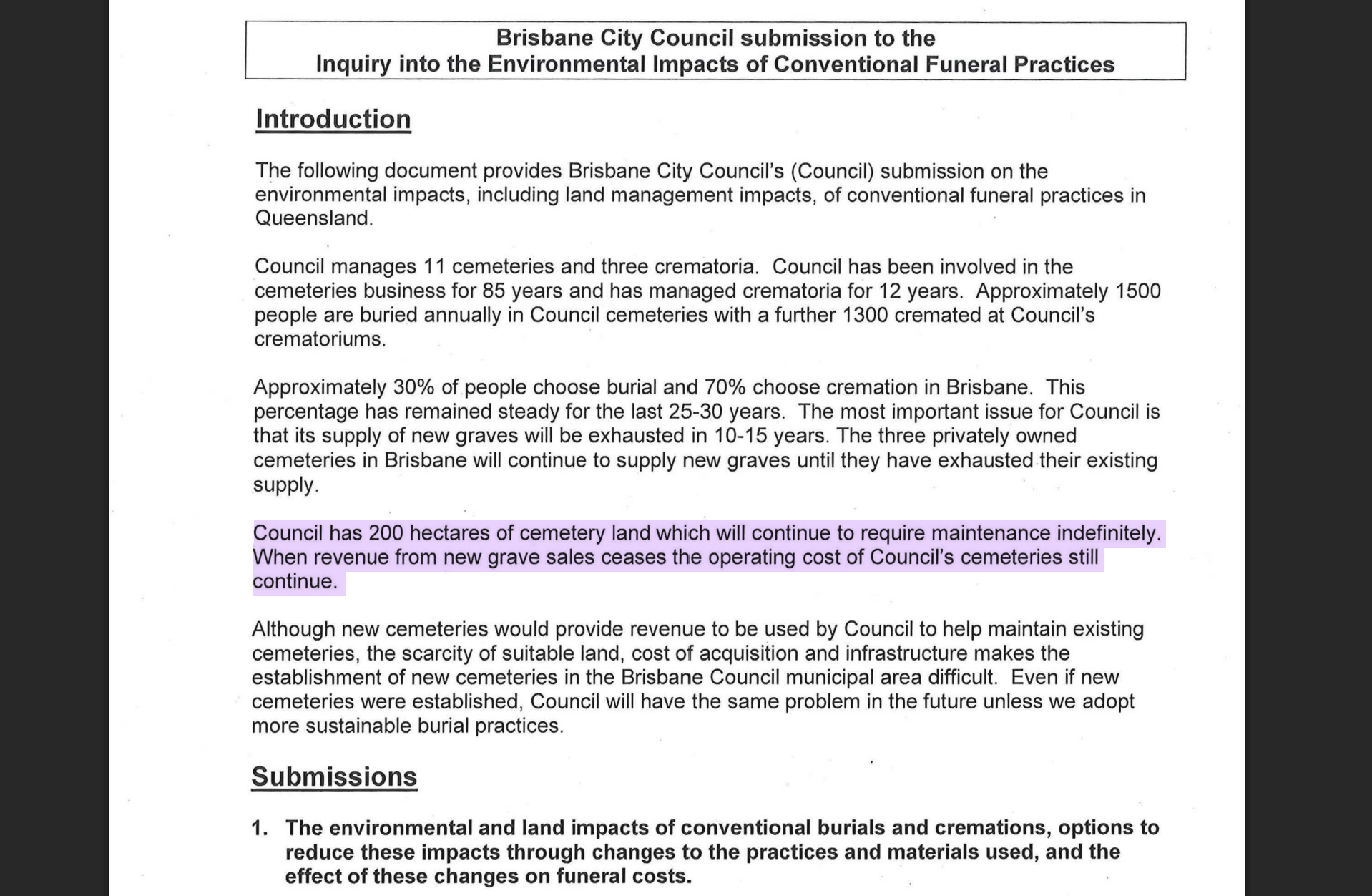
Excerpt from Brisbane City Council’s submission to the Inquiry into the Environmental Impacts of Conventional Funeral Practices, discussed during the presentation