Natural Burial Community Q&A Evening 30th March 2026
Hello again! I, Brittany Rose, hosted the second Natural Burial Community Q&A Evening on 30th Feb 2026 at Virgo Funerals.
Approximately 30 community members attended the meeting, a more intimate gathering than the first, and was held at 6pm in the Virgo Funerals Chapel, 24 Pioneer Avenue, Kingaroy, QLD.
I presented trivia, a powerpoint presentation on Natural Burial practices during which Dr. Sandra Tuszynska also presented on soil microbiology, and the panel members answered questions from the community in an engaging discussion.
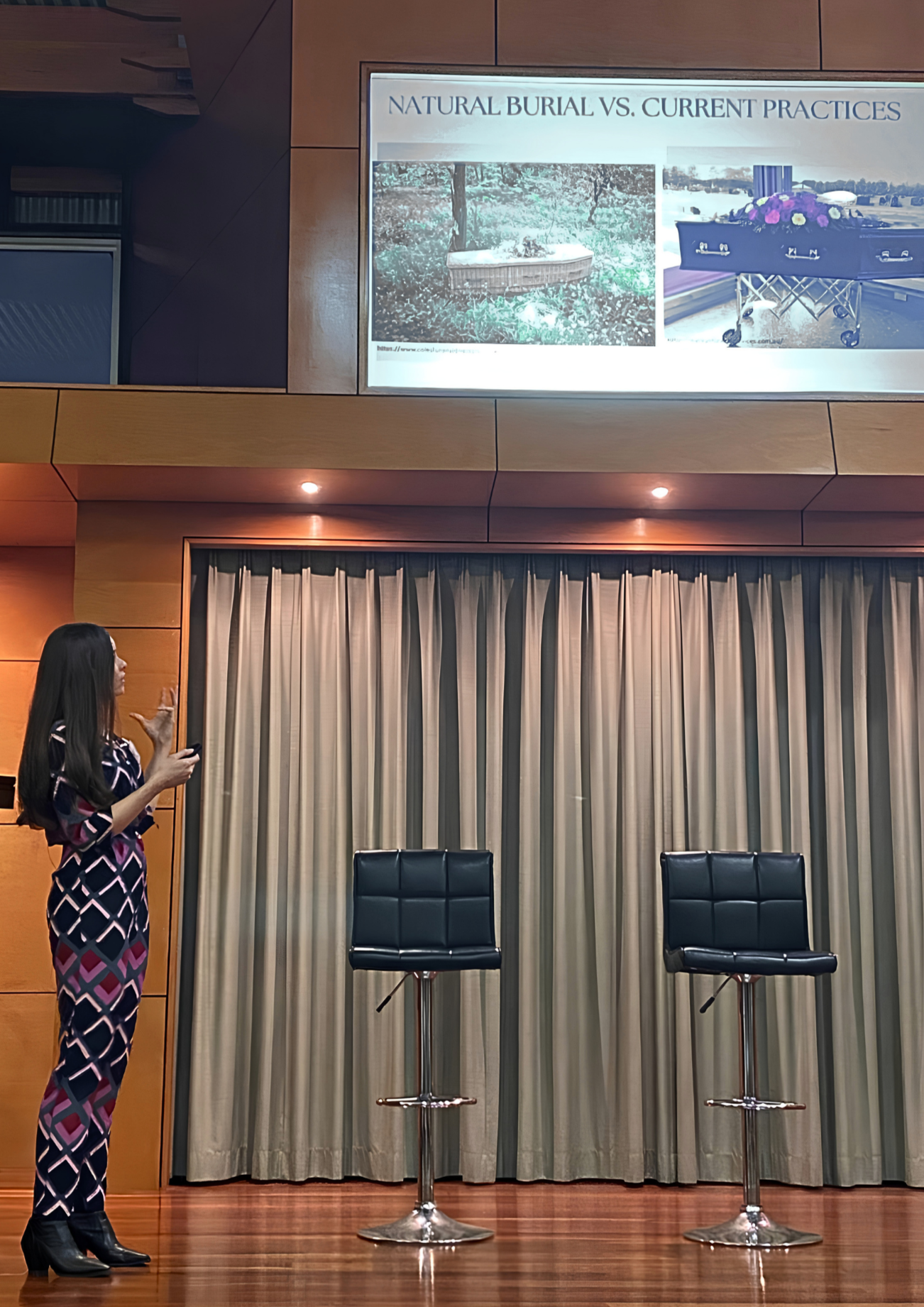
Brittany Rose presenting on how natural burials differ from current practices
We covered what natural burial it is, how it differs from conventional methods and why it’s an important disposition method to consider.
Dr. Sandra Tuszynska (soil ecologist and microbiologist) presented relevant information on soil, and how natural burials can enhance soil microbiology, if done correctly, for example adding mulch to the grave at the time of burial, to enhance microbial life and therefore enhancing the natural process of decomposition.
Our wonderful panel of speakers took their seats on stage and we proceeded with our community discussion. Many community members asked questions and it was a very engaging discussion.
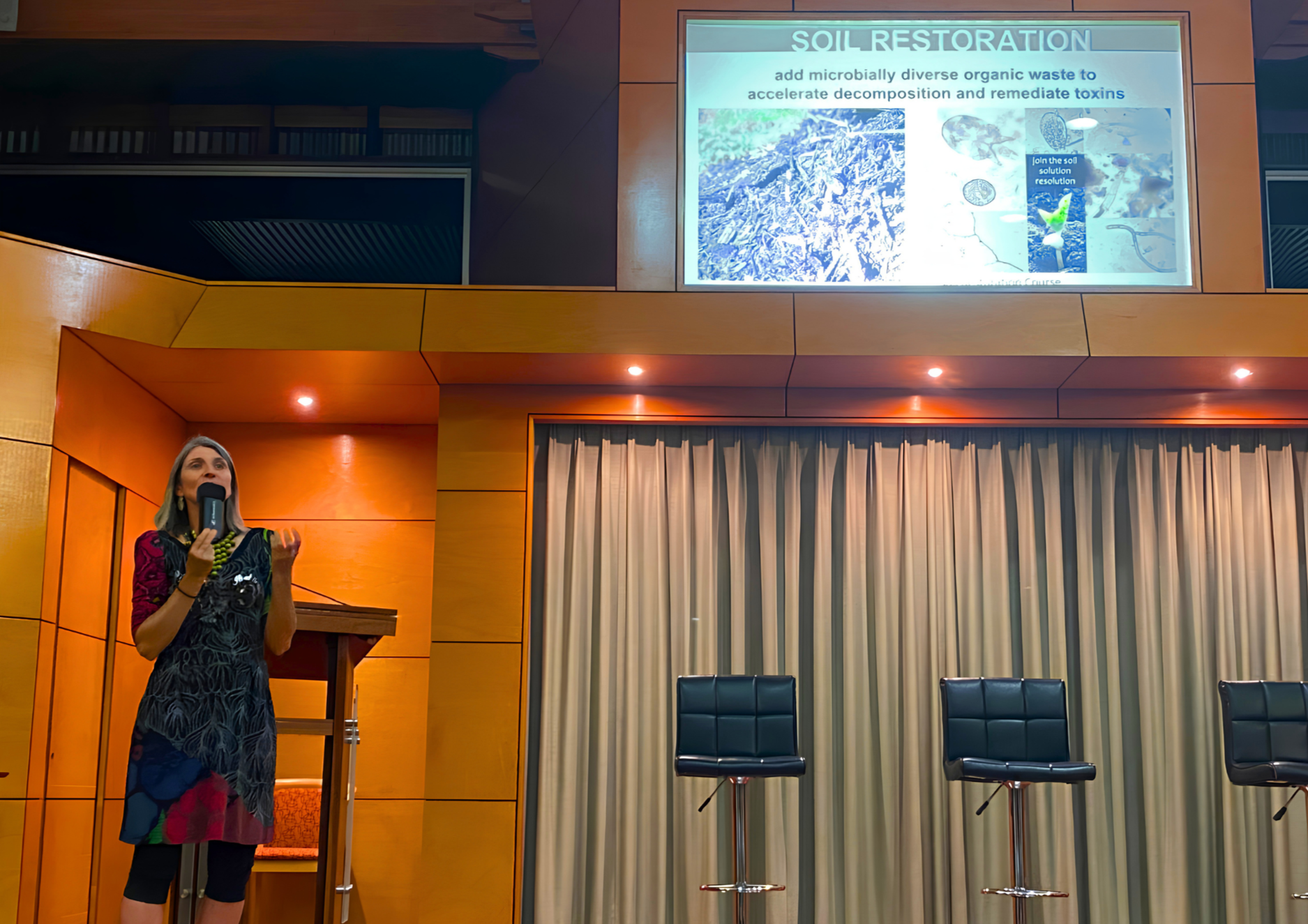
Dr. Sandra Tuszynska presenting on soil restoration and how natural burials can help improve soil and microbial life
Questions from community members and a brief summary of the answers included;
Is natural burial cheaper?
It can be cheaper. Simplified monuments, less intensive mortuary prep and biodegradable coffins can contribute to lower costs. In Alberton Park Natural Burial section it was more expensive because of the need for council to pay workers to weed the cemetery by hand rather than using pesticides. An community member suggested dense planting of natives be done at the time of burial to mitigate the need for weeding. It was agreed that methods such as this, aswell as better planning could mitigate higher costs that can be associated with natural burial.
Can you have a natural burial in a regular cemetery?
Yes, however having a designated natural burial ground provides overall environmental regeneration and care in that area.
How eco friendly is aquamation/alkaline hydrolysis?
It isn’t. This is a case of “greenwashing.” It actually requires a lot of energy to boil water for 8+ hours, and each water cremation uses 1000+ litres of water that is not recycled. The end result is an alkaline solution that is not environmentally friendly, but is frequently poured back into the environment.
What if you did dense planting in an area after a burial, wouldn’t that negate the need for weeding and maintenance in that area thereafter, thus bringing down fees for natural burial because of decreased maintenance required by council in the long term, as opposed to conventional cemeteries?
Yes, planning for the long term is the key for successful revegetation and lower maintenance fees. This would be an excellent way to create a green local space quickly, regenerating the native bushland whilst ensuring minimal/no council maintenance is required in future.
Can you have double interments?
No, only single interments. This is because the microbes that decompose remains are found closer to the ground surface, so burying bodies at deeper depths (as you would for a double interment) contradicts the principles of natural burial.
Surely there are parcels of land that council aren’t using- as ratepayers we should be able to say we want that land to be designated to cheaper burial grounds.
Yes, this is something you could talk to your local council about.
Are there laws about what can and cannot be cremated? e.g plastics in coffins, flower oasis’, teddy bears etc
At this stage, no, but this is something ACCA is reviewing.
What happens to metal hip replacements etc in a natural burial?
They remain in the ground. This is an unfortunate outcome, but not really something that can be prevented.
Will dingos dig up bodies that are buried at shallower depths?
If dingos are known to live in a certain area it would unlikely be a suitabale location for a natual burial ground. This has not proven to be a problem at other natural burial cemeteries in Qld.
Would a natural burial cemetery be protected from tree clearing in future?
Yes, most likely. It would depend on the local council’s regulations.
What happens to the leachate from bodies (heavy metals, chemotherapy and pharmaceutical drugs, chemicals in the body) in a natural burial?
In natural burial this problem is solved right away, because the decomposing microbes have access to the chemically untreated body and can get to work right away at filtering or metals and leachate while breaking down the remains. This is one of the significant benefits to natural burial, as it does not contaminate the soil or groundwater.
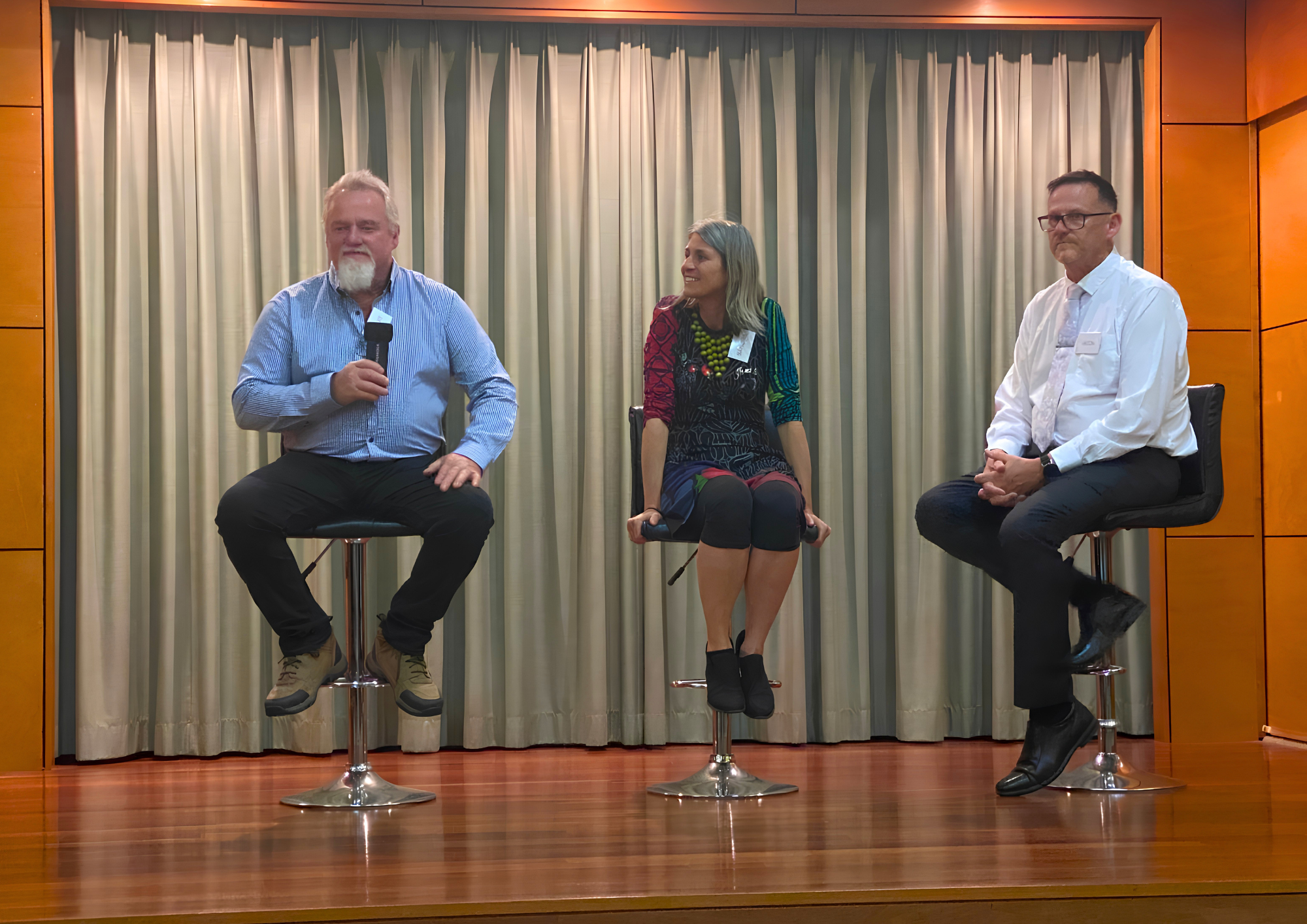
Panel members (left to right) Robert Moore, Dr. Sandra Tuszynska and Jason Talbot-Scobie answering audience questions
The Panel Speakers included:
Dr. Sandra Tuszynska (Soil Microbiologist and Ecologist)
Sandra Tuszynska (PhD) is a mycologist, a soil microbiologist and ecologist who feels passionate about ecosystem and biodiversity restoration. As a science communicator, public speaker and educator, Sandra explains how to cultivate soil biodiversity as the primary step in food production and ecosystem regeneration. In her Soil Restoration Course she describes the intricate symbiotic relationship between plant roots and their associated microbes, providing practical tools to restore our soils with life. Sandra’s Soil Restoration Course: www.soilrestorationcourse.com
Robert Moore (Cemeteries Coordinator for the Fraser Coast Regional Council)
Rob Moore has over eight years experience in local government and a strong background in structural landscaping and earthmoving, including running a successful landscaping business. Rob holds a Graduate Certificate of Cemetery Practice from Deakin University, along with a Diploma of Horticulture, a Diploma of Occupational Health and Safety, and a Certificate IV in Civil Earthworks. He also served for two years as a Board Director with the Australasian Cemeteries and Crematoria Association (ACCA). Rob brings a grounded, operational perspective to cemetery management (including Nikenbah Natural Burial Cemetery in Hervey Bay), landscape infrastructure, and community service. He is passionate about sharing knowledge and improving practices across the sector.
Jason Talbot-Scobie (Funeral Director & Manager of
Virgo Funerals)
Jason Talbot-Scobie is a funeral director and manager of Virgo Funerals and South Burnett Crematorium. Jason is the longest running funeral home manager in the Propel Funeral Partners group, having worked in the funeral industry for 19 years, and managing Virgo Funerals for the last 12 years. Jason is also an enrolled nurse with 17 years experience working in hospitals and aged care facilities.
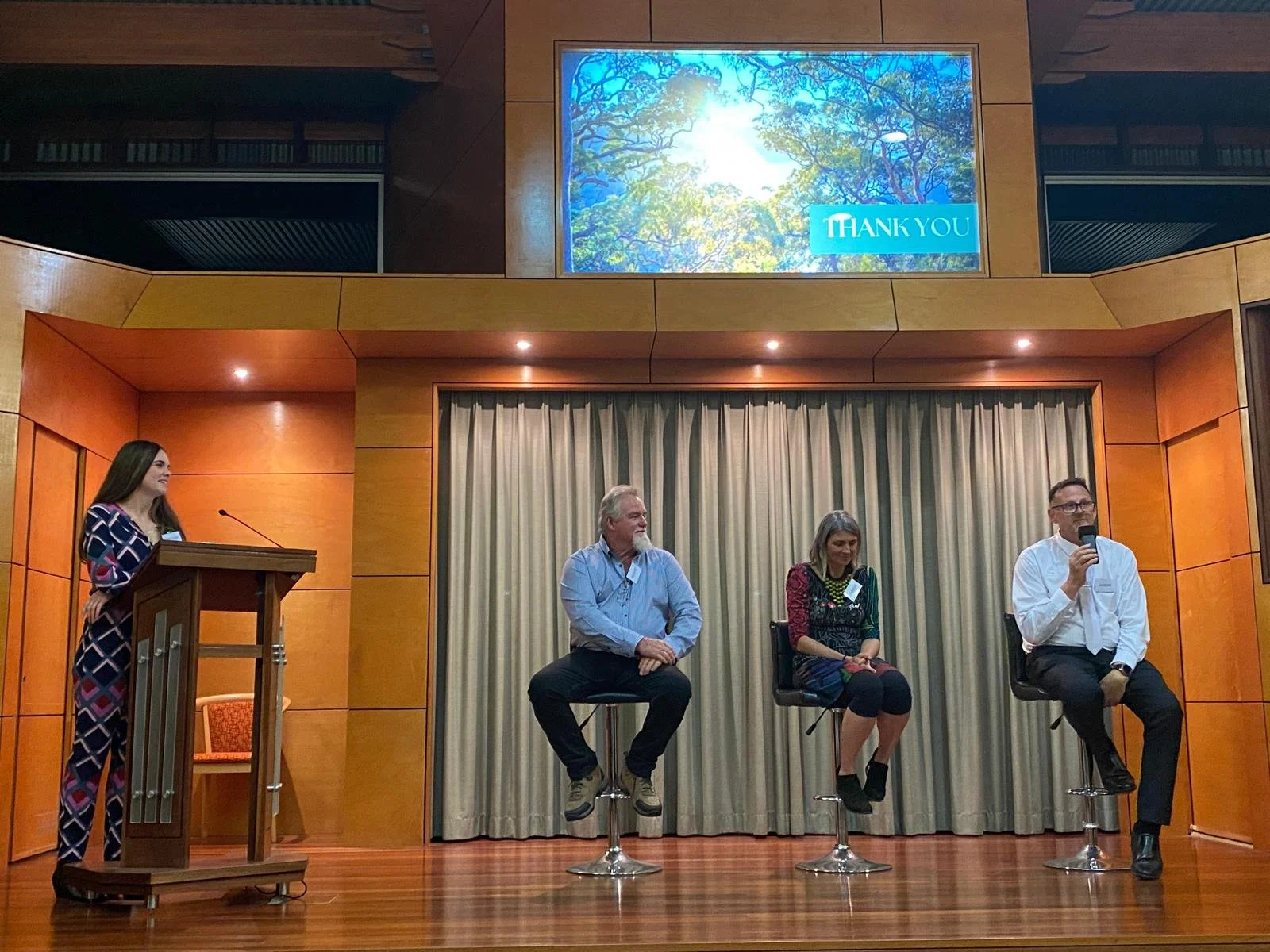
Brittany, Rob, Sandra and Jason engaging in Q&A discussion with community members
It was an exciting evening with lots of positive feedback from community members. I am especially grateful to all of the wonderful guest speakers who generously gave their time for free to our community, and to Jason Talbot-Scobie who offered for me to host these events in the Virgo Funerals Chapel, so that I didn’t have to rent the town hall, as was my initial plan. It has been wonderful to organise and host these events, and to see so much interest from our community, and support from industry professionals.
My next step is to make a proposal to council to establish a natural burial cemetery in the South Burnett. The main question is where to do it? Some potentials may be to develop one as an extension to an existing cemetery, use private land or land that council owns but is not using or church owned land.
I’ll keep you posted here, stay tuned for updates!
Brittany
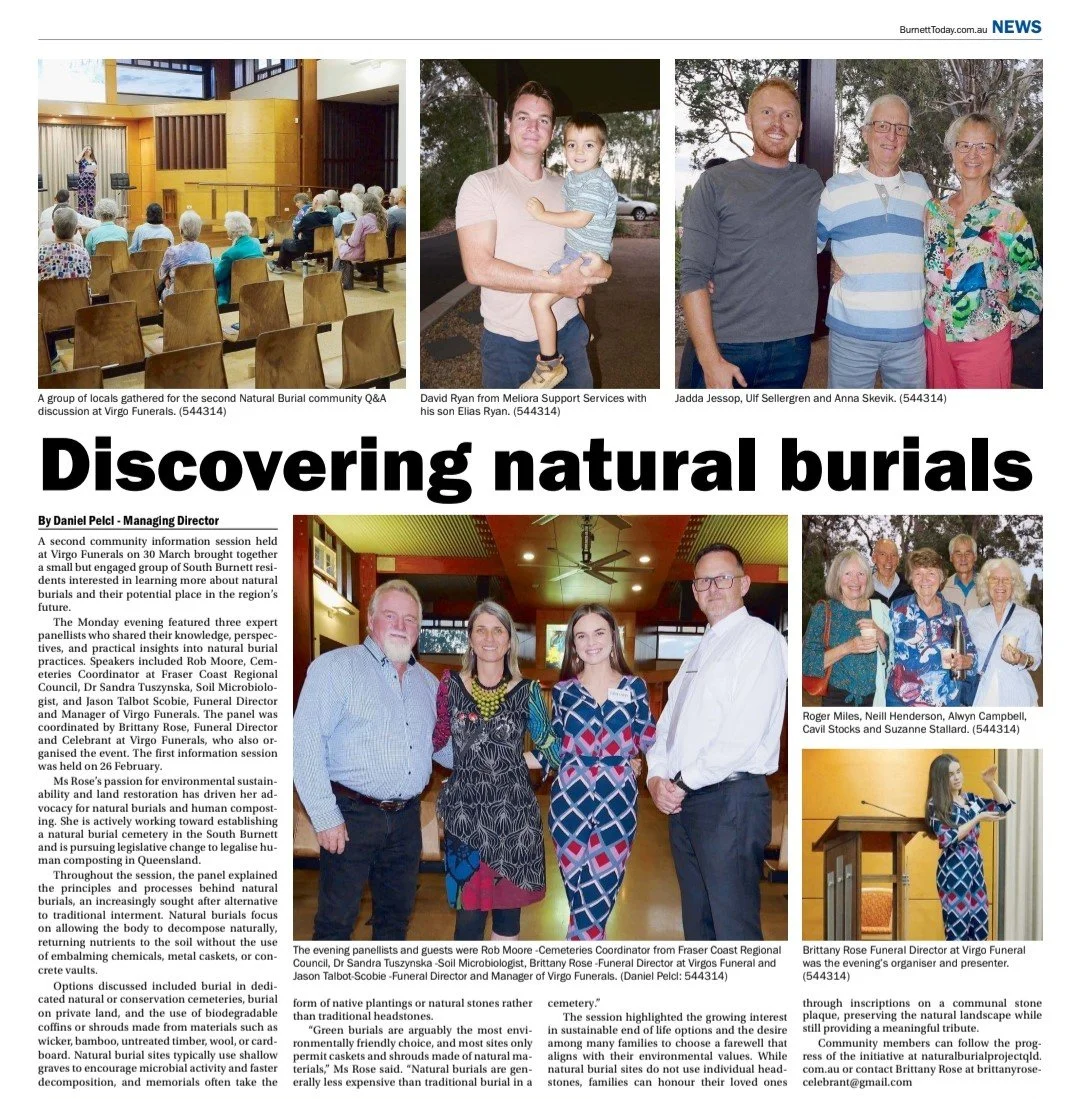
Burnett Today newspaper article published 2nd April 2026